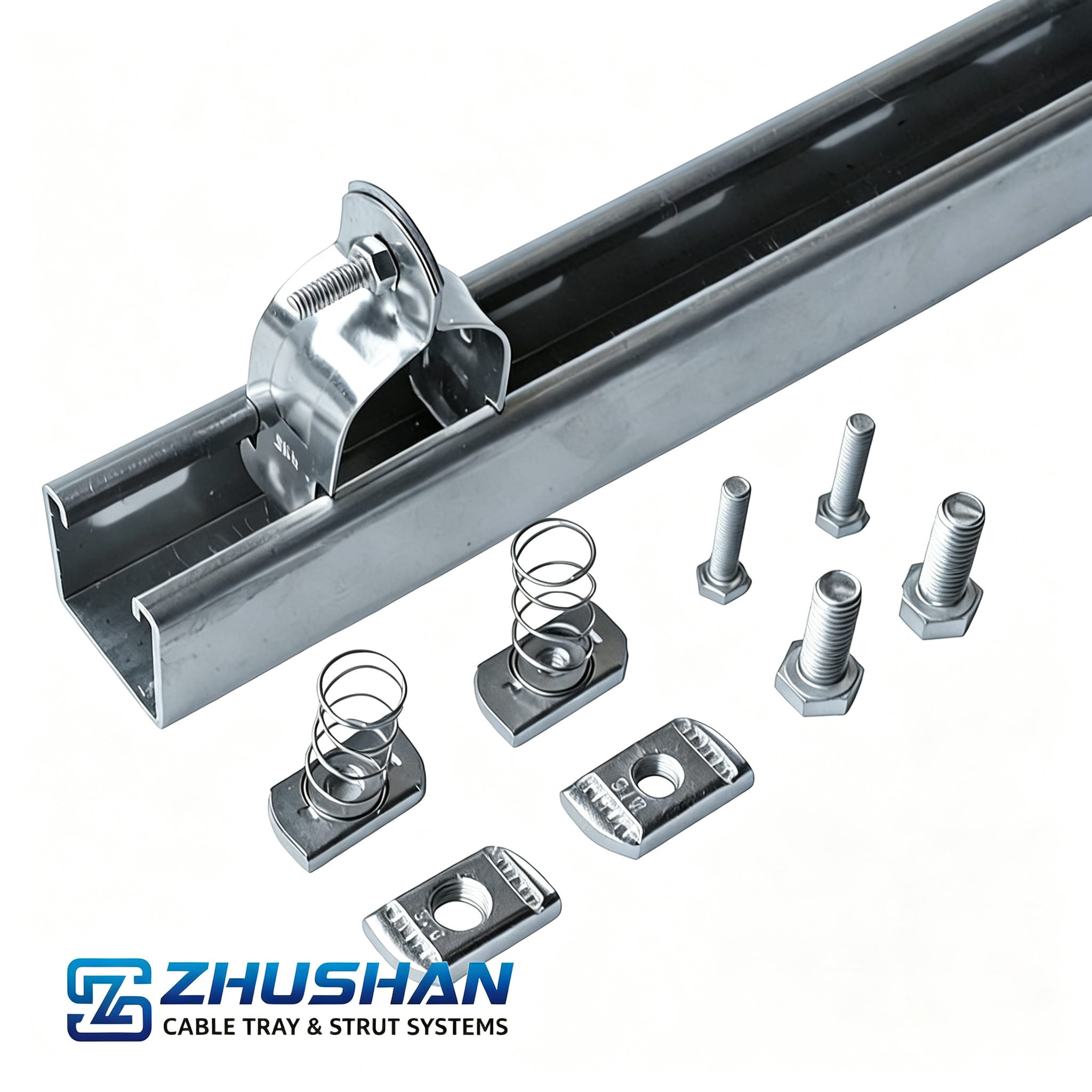
Six Common Corrosion Issues & Core Causes of Electro-Galvanized Strut Channels
1. Six Frequent Corrosion Problems Unique to Electro-Galvanized Steel
Electro-galvanized strut channels corrode much faster than hot-dip galvanized ones when used outdoors, in basements, humid workshops or closed damp warehouses. The six typical corrosion conditions are as follows:
- Extensive white rust The ultra-thin zinc layer of electro-galvanized steel rapidly forms powdery white zinc oxide under high humidity. It will penetrate the coating and turn into spotted red rust within several months.
- Large-area peeling & flaking zinc coating The electroplated zinc layer has weak adhesion. It peels off completely under minor collision, friction or rain wash, exposing bare steel substrate and triggering rapid rusting.
- Severe corrosion at cut & drilled edges On-site cutting and drilling fully destroy the thin zinc coating. Without alloy layer protection, cut edges corrode the fastest, with rust spreading inward to the whole profile.
- Rapid pitting corrosion under light salt fog & moisture In coastal areas, underground pipe galleries or mild acid-base chemical sites, electro-galvanized layers develop rust pits and perforations within one year, failing long-term load-bearing performance.
- Aggravated galvanic corrosion stains Direct contact between electro-galvanized steel and stainless steel or aluminum alloy fittings triggers electrochemical reactions in damp environments, forming large dark rust spots.
- Widespread rust from short-term aging Long-term exposure to moisture and UV rays wears down the thin zinc layer indoors. Expanding rust spots weaken bent sections and slotted holes, leading to deformation or fracture risks.
2. Four Root Causes of Electro-Galvanized Steel Corrosion
- Wrong environment matching Electro-galvanized steel is only designed for dry indoor use. Its thin zinc coating fails quickly if applied to damp basements, outdoor areas, coastal zones or chemical plants.
- Non-standard construction work Random cutting and surface scratching damage the original protective layer, with no zinc-rich touch-up paint applied after installation, leaving bare steel exposed to moisture and corrosion.
- Unregulated storage conditions Profiles without moisture-proof wrapping are stacked directly on wet ground in poorly ventilated warehouses, generating white rust even before delivery.
- Lack of regular anti-rust maintenance No semi-annual inspection for damp indoor projects; minor white rust is left untreated and develops into severe corrosion.